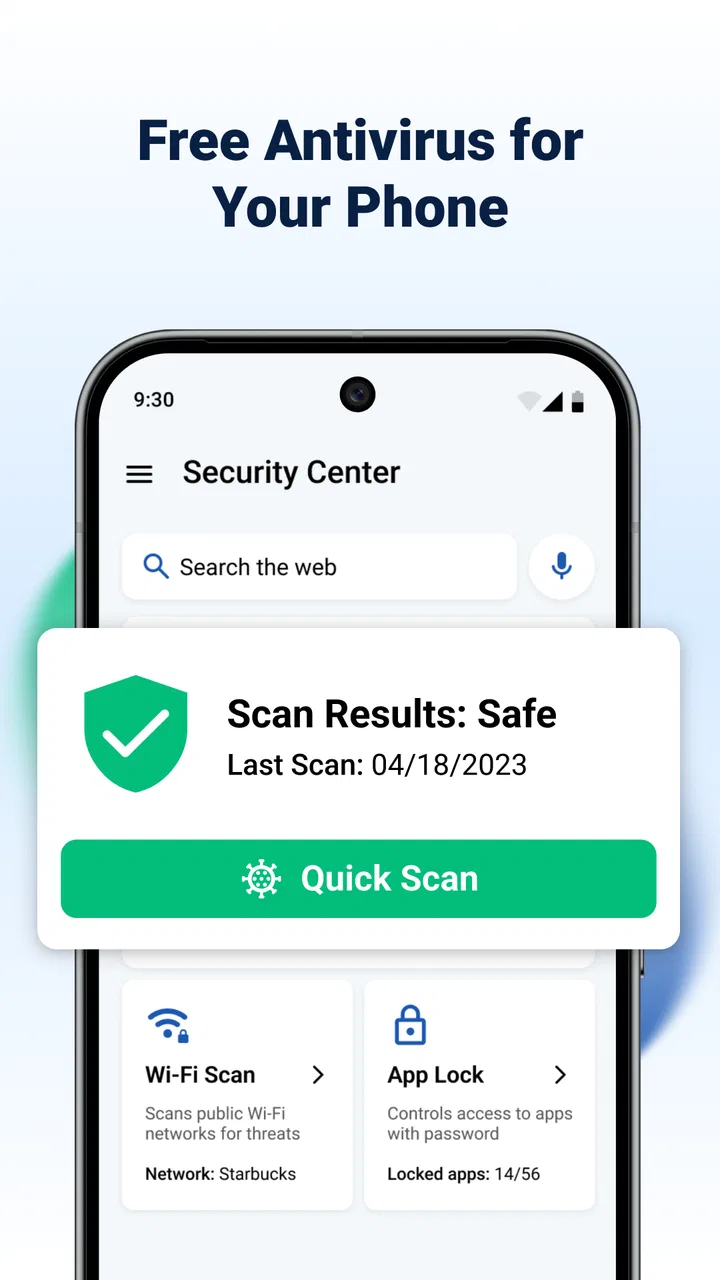
Shield: Antivirus Home Screen
- 4.4
- Rating
- 5.00M
- Installs
- Free
- Price

 Analysis by App-foxy
I spent time with Shield: Antivirus Home Screen as a personalization app rather than treating it like a typical security utility. That distinction matters because its appeal is not only about checking a phone for threats. It is also about changing the way the home screen feels while keeping security and Wi-Fi monitoring close at hand. The result is a product with a fairly clear audience: people who want a more security-focused phone experience without paying just to install it.
Developed by Bacchus Media, the app has built a substantial audience, with over five million installs, an average rating of 4.4, and around 168 thousand ratings. Those figures suggest that the concept works for many Android users, although popularity alone does not tell me whether it suits every phone or every privacy preference. After looking at its purpose, cost structure, and everyday usefulness, I see it as a convenient layer for cautious users, but not as an automatic replacement for the security tools already built into a modern phone.
How Shield fits into everyday phone use
The most useful way to understand this app is as a combination of home-screen personalization and security awareness. Its store summary presents it as antivirus and Wi-Fi monitoring protection for personal data, while the short description calls it Shield Antivirus. In practice, that positioning makes the home screen part of the experience rather than an unrelated decoration. You are not simply installing another icon and forgetting it; the app is intended to keep protection-oriented information within easy reach.
You May Also Like

 Blood Strike: 2.5 Anniversary
Blood Strike’s Loadouts Turn Every Drop Into a Tactical Gamble
A close look at Blood Strike’s custom loadouts: how fast access to signature weapons reshapes its battle royale rhythm, rewards preparation, and narrows the gap between fights.

 Pandora - Music & Podcasts
Pandora’s Music Is Easy to Start, but Harder to Recover
Pandora’s strength is its low-effort path from a seed to a station. Its weak spot is how much confidence it asks you to place in connection, setup, and quiet recovery.

 8 Ball Pool
 Is Built on Rivalries, Rematches, and Routine
A close look at the rivalries, rematches, shared routines, and unanswered safety questions that turn a quick pool match into a persistent mobile community.

 Samsung Music
’s Quiet Strength Is Playing What You Already Own
Its reach comes less from spectacle than from dependable access to a personal library. That simplicity is both the app’s strongest retention engine and its ceiling.

 AccuWeather: Weather Radar
AccuWeather Review: A Quick, Clear Forecast for Everyday Decisions
For everyday plans, the best forecast is the one you can understand quickly. AccuWeather makes rain timing, radar, and local conditions easy to act on, with a few trade-offs.

 Hill Climb Racing
Why Hill Climb Racing Still Turns Crashes Into One More Run
A tiny car, a bumpy hill and one more upgrade: Hill Climb Racing keeps resurfacing because its simple chaos makes every near-miss feel personal.
More From Our News Desk



That can be helpful when I want a quick visual reminder to think about the condition of a device or the network I am using. A security app that stays buried in an app drawer is easy to ignore. A home-screen-centered tool has a better chance of becoming part of a routine, especially for someone who often connects to unfamiliar Wi-Fi in cafés, hotels, libraries, or shared offices.
At the same time, I would not confuse visibility with complete protection. A home-screen security experience can make warnings easier to notice, but it cannot remove the need for sensible Android habits. I would still install apps carefully, review unexpected prompts, keep the operating system current, and avoid entering sensitive information on networks I do not trust. Shield makes those habits more visible; it does not make them unnecessary.
What the free entry point means
Shield is free to download, which makes trying it relatively straightforward. That is important for this kind of app because the value depends on whether its home-screen approach feels useful on your particular device. I can test the experience without committing money first, then decide whether the extra functions justify further spending.
The app also contains in-app purchases ranging from $4.99 to $47.99 per item. I would treat that range as a reason to inspect the purchase screen carefully before confirming anything. The free starting point is clear, but the presence of paid items means the overall value depends on which part of the experience is available without payment and which part is reserved for upgrades. I would not assume that installing the free version automatically provides every security-related option.
This is where the app is easier to recommend to curious users than to someone looking for a completely predictable one-time purchase. If you only want a free tool to try, there is little financial risk in testing it. If you are considering a paid tier, decide first what problem you want to solve: a more security-focused home screen, easier awareness of Wi-Fi conditions, or broader protection features. Paying makes more sense only when the specific functions you need are clearly included.
How it compares with built-in Android protection
Most Android phones already include basic security checks and system-level safeguards. Because of that, Shield should be judged on convenience and presentation, not simply on whether it can claim to protect a phone. Its advantage is the way it brings security into the personalization category. A built-in tool may be less noticeable, while Shield can make security feel like part of the phone’s daily interface.
The trade-off is that an additional security app may feel unnecessary to people who are already comfortable with Android’s standard protections. If your main goal is occasional reassurance and you rarely use unfamiliar networks, the built-in tools may be enough. In that situation, Shield’s value comes mostly from its home-screen style and monitoring workflow, not from replacing the platform’s own defenses.
Compared with a conventional antivirus app, Shield appears more approachable for someone who wants protection presented in a simple, visible way. A traditional security utility may be preferable for users who want a dedicated dashboard and a narrowly focused security product. Shield is the better match when personalization is part of the reason for installing it in the first place.
A realistic day with the app
Imagine I am working from a hotel and need to connect my phone to the guest Wi-Fi. Instead of treating the connection as invisible background plumbing, I can use a monitoring-oriented home-screen tool as a prompt to pause and think about what I am doing. I would connect only when necessary, avoid sensitive transactions if the network seems questionable, and switch to mobile data for anything particularly private.
Later, when I return home, the same home-screen presence still has a purpose. It keeps the idea of device and network safety in view without requiring me to open a separate app every day. That is a small benefit, but it is more practical than a security app I remember only after something has already gone wrong.
There is also a useful family scenario. Someone who is not confident about suspicious links, public Wi-Fi, or unusual phone behavior may find a visible security-focused interface easier to understand than a collection of buried system menus. I would still explain the basics rather than relying on the app to teach everything, but the presentation can support better habits.
Small workflow choices that improve its usefulness
My first recommendation is to decide what you want the home screen to accomplish before changing anything. If the goal is security awareness, keep the relevant elements easy to see instead of filling the screen with unrelated shortcuts. The benefit of this app is strongest when the interface helps you notice something at a glance, not when it becomes visual clutter.
Second, use the Wi-Fi angle as a decision aid rather than a blanket guarantee. When I am on a public network, I would treat any monitoring information as one clue among several. I would not use a reassuring screen as permission to ignore phishing, fake login pages, or unsafe downloads. This is a non-obvious but important trade-off: a visible security signal can improve attention, yet it can also create overconfidence if I read it as an all-clear certificate.
Third, review the paid options only after using the free experience long enough to identify a real gap. A purchase is easier to judge when I can name the missing convenience or protection feature. Without that step, it is easy to pay for a broader package simply because the app looks polished or because a warning creates urgency.
Where the experience may become frustrating
The home-screen focus will not appeal to everyone. Some people want their launcher to remain minimal and prefer security tools to stay out of sight until needed. For them, a persistent personalization layer may feel like an interruption rather than a benefit. If I were strict about a clean, unchanged home screen, I would probably choose a conventional security utility or rely on the phone’s built-in tools instead.
There is also a learning curve in deciding how much attention to give the app. A security-focused interface can encourage healthy caution, but frequent alerts or reminders may become background noise if they do not lead to a clear action. The best experience is likely to come from users who are willing to adjust the setup and keep only the information they find useful.
The paid structure is another point of friction. Free access is valuable for testing, but the wide purchase range makes it important to understand what you are buying before spending. I would be especially careful if I wanted a long-term security solution and expected a single payment to settle the matter. The listed purchase range tells me that paid value varies by item, so the decision should be based on the exact option shown in the app rather than on the free label alone.
Who will get the most from it
I think Shield is most useful for Android owners who enjoy personalization but want it to serve a practical purpose. It suits people who move between home, work, travel, and public networks and appreciate a visible reminder to think about connection safety. It can also help less technical users who prefer a straightforward security presence over a collection of system settings.
It is a reasonable choice for someone who wants to explore a security-oriented home screen before paying. The free installation makes that trial possible, and the Everyone content rating keeps the app broadly approachable. The technical baseline is also accessible: the current version is 4.0.41 and requires Android 9 or later, so users on older systems should not plan around it.
I would be more cautious about recommending it to experienced Android users who already have a carefully managed setup. If you use only trusted networks, install very few apps, and are satisfied with the phone’s existing protection, the added layer may not change your daily life enough to justify extra complexity. Likewise, anyone seeking a highly specialized antivirus suite should compare Shield with dedicated alternatives before treating it as a complete answer.
What I would check before paying
Before selecting an in-app purchase, I would read the wording on the exact item, identify whether it is a one-time purchase or another kind of payment, and confirm which functions it unlocks. I would also ask myself whether I am paying for protection I genuinely need or mainly for a different visual experience. That distinction prevents the personalization angle from disguising the real value of the upgrade.
I would test the free version in the places where I normally use my phone. If the home-screen information helps me make faster, clearer decisions on public Wi-Fi, it has practical value. If I stop noticing it after a few days, the paid options are unlikely to solve the underlying problem. A security app should earn its place through useful decisions, not just through occupying screen space.
Privacy-conscious users should also keep their expectations realistic. I would avoid granting trust automatically to any app simply because it uses security language. I would read the Android permission prompts and the app’s own explanations, then decide whether the requested access fits the functions I intend to use. That is good practice here because an antivirus label should encourage scrutiny, not replace it.
My value judgment after using it
What I like most about Shield is the attempt to connect two areas that are often separated: the look of the home screen and the everyday task of staying alert to security risks. That makes the app more memorable than a conventional scanner that I open only occasionally. The idea is especially effective for users who respond well to visual reminders and want their phone interface to reflect their priorities.
What limits my enthusiasm is that the same approach can feel excessive for people who prefer a quiet launcher. The app also needs to be evaluated carefully as a free product with optional paid items, because the installation price alone does not establish the value of every feature. I would not pay at the top of the listed range without first identifying a specific, recurring benefit that the free experience does not provide.
The audience size and strong average rating show that the approach resonates with many users, but I would still make the decision based on habits rather than popularity. A frequent traveler, a family member who wants more visible guidance, or a personalization fan may notice real value quickly. A technically confident user with a minimal home screen may find that the standard Android experience is cleaner and already sufficient.
My recommendation
I recommend trying Shield if you want a free starting point for a security-aware home screen and you regularly think about unfamiliar Wi-Fi or device safety. Give the free version a fair test in your normal routine, keep the interface focused, and use its signals as prompts for sensible behavior rather than as absolute guarantees. That is where I see its strongest practical role.
I would skip it if you dislike home-screen customization, want a narrowly focused antivirus dashboard, or already feel well served by your phone’s built-in protection. I would also postpone any purchase until the exact paid feature solves a problem you have actually encountered. The best value here comes from useful visibility, not from paying for security language alone.
Overall, Shield: Antivirus Home Screen is a thoughtful personalization app with a security purpose, offered free to try and supported by optional purchases. Bacchus Media has built something that can make safer habits easier to remember, especially around Wi-Fi use. For me, it is worth testing for the right audience, but it is not an automatic upgrade for every Android phone. Its success depends on whether you want security to be part of your home screen every day.
FAQs for Shield: Antivirus Home Screen
01What features does Shield: Antivirus Home Screen offer?
Shield: Antivirus Home Screen provides real-time protection against malware, viruses, and phishing attempts. It includes a smart scanning feature that analyzes new apps automatically, a secure browsing option to protect your online activity, and customizable home screen widgets for quick access to security tools.
02Is Shield: Antivirus Home Screen free to use?
Shield: Antivirus Home Screen offers a free version with basic security features. However, for enhanced protection, users can opt for the premium version, which includes advanced features like deep scanning, priority support, and ad-free experience. Subscription details are available in the app store.
03How does Shield: Antivirus Home Screen affect battery life?
Shield: Antivirus Home Screen is designed to be energy-efficient, running in the background without significantly affecting battery life. It uses minimal resources for real-time protection and scheduled scans. Users can also customize scanning frequency to optimize performance and battery usage.
04Can Shield: Antivirus Home Screen protect my personal data?
Yes, Shield: Antivirus Home Screen includes features specifically aimed at safeguarding personal data. It provides secure browsing to prevent data theft, and the app locker feature allows users to protect sensitive apps with a password or biometric authentication, ensuring privacy and security.
05Is Shield: Antivirus Home Screen easy to use for beginners?
Absolutely. Shield: Antivirus Home Screen is designed with user-friendliness in mind. It features an intuitive interface with clear instructions and easy navigation. Beginners can easily set up and manage their security settings without any technical expertise, making it accessible to all users.
Pros
- Lightweight and efficient in scanning.
- User-friendly interface for all ages.
- Runs seamlessly in the background.
- Customizable security settings.
- Frequent updates for new threats.
Cons
- Drains battery faster than some apps.
- Occasional false positives detected.
- Premium features locked behind paywall.
- Limited customer support options.
- Ads in free version can be intrusive.

Shield: Antivirus Home Screen
Gallery